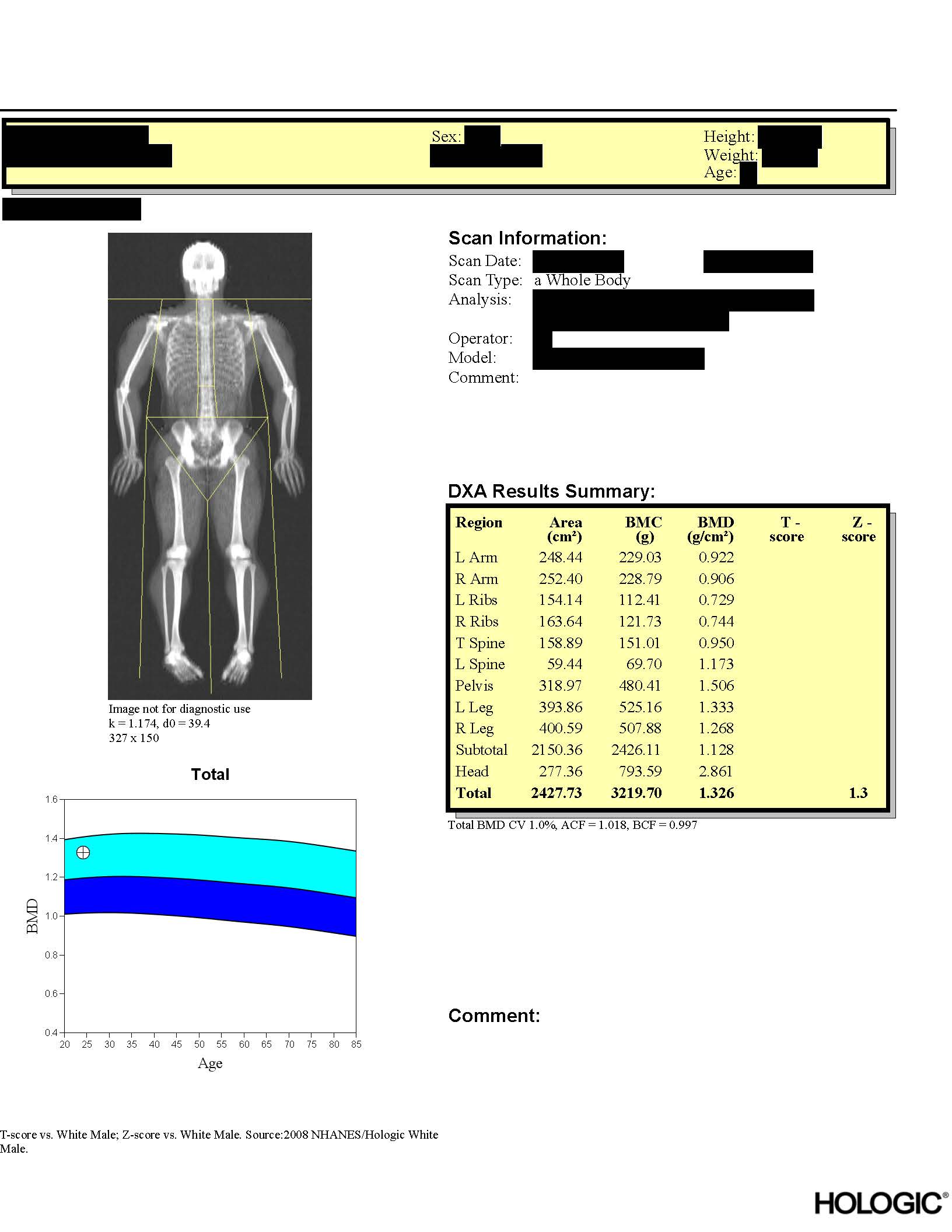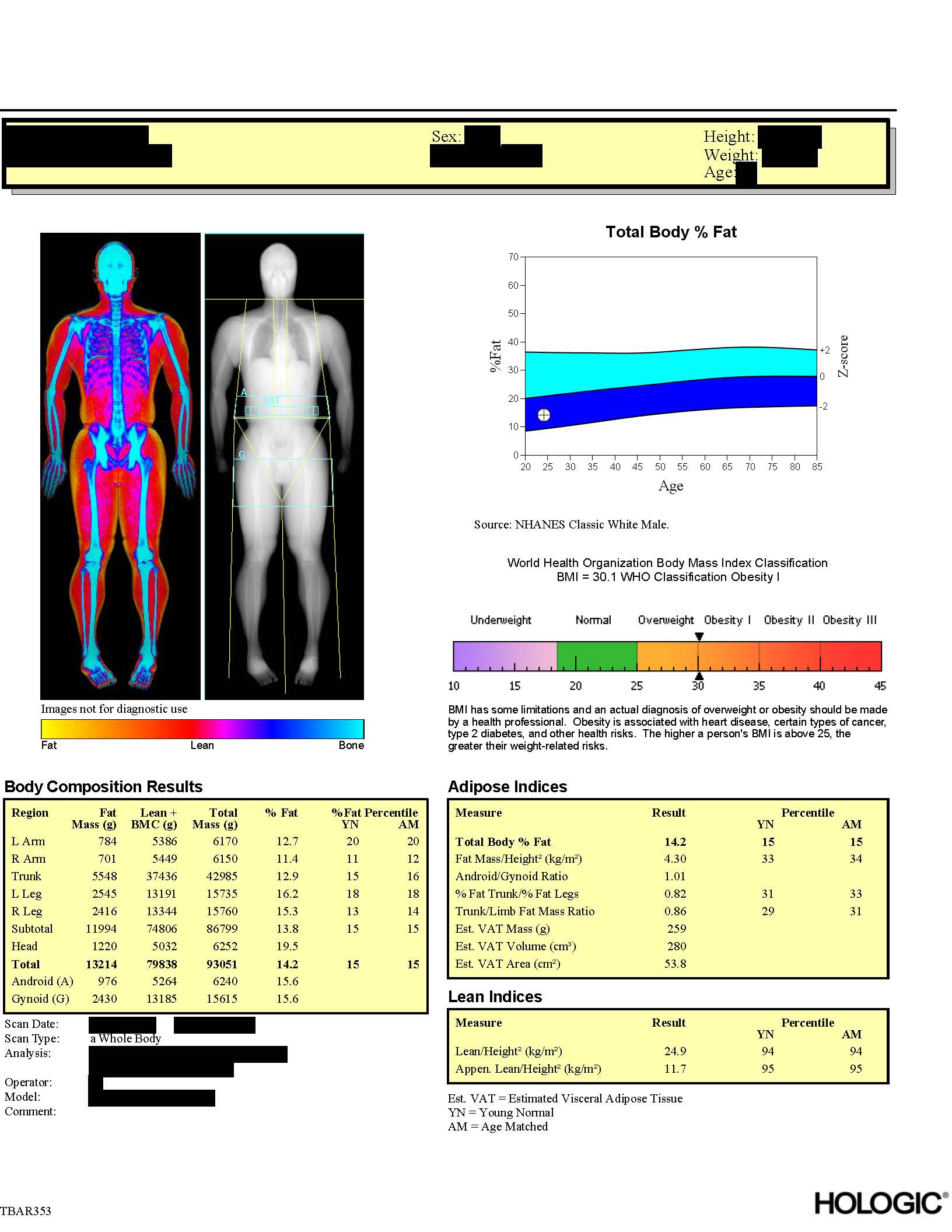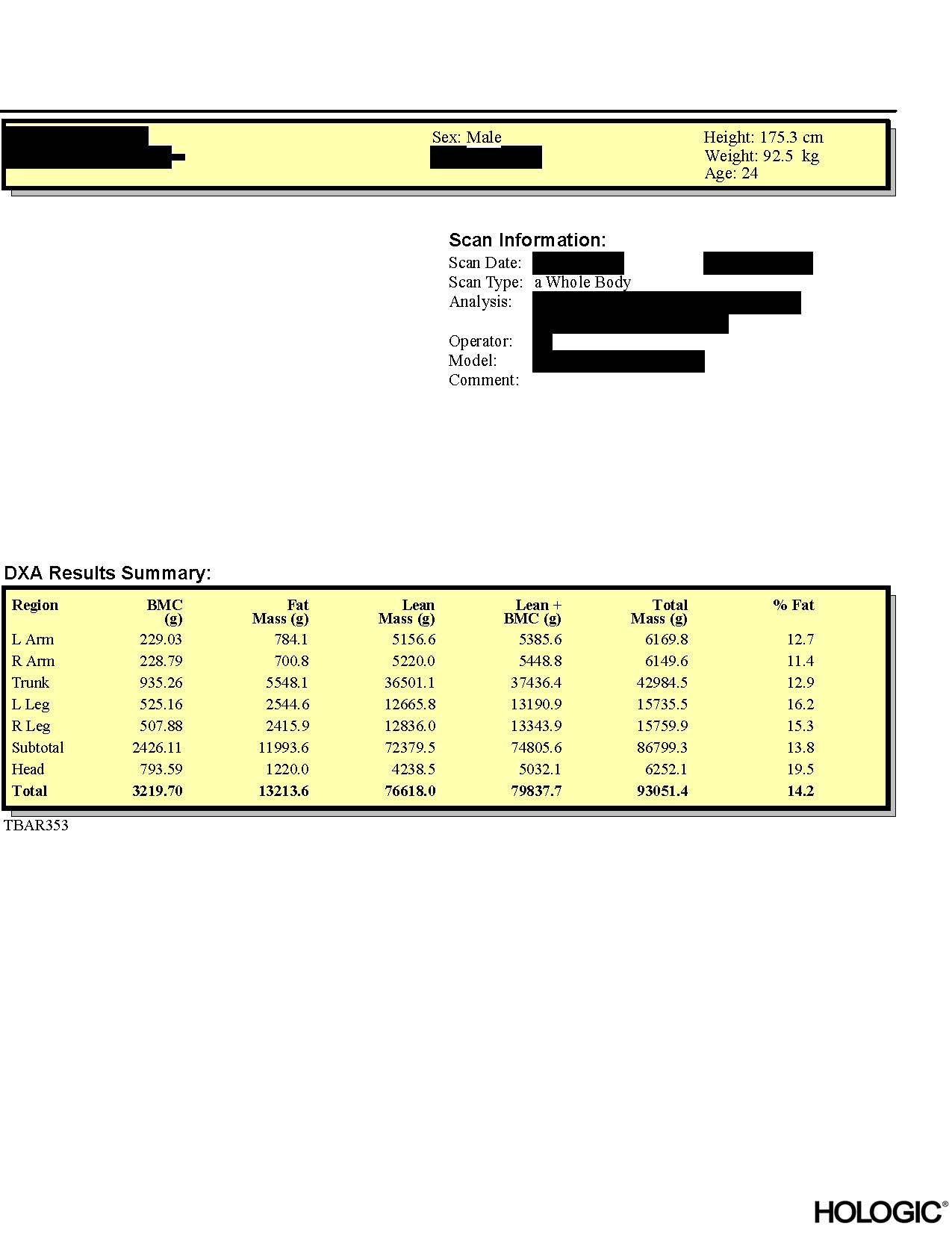
DXA Scan
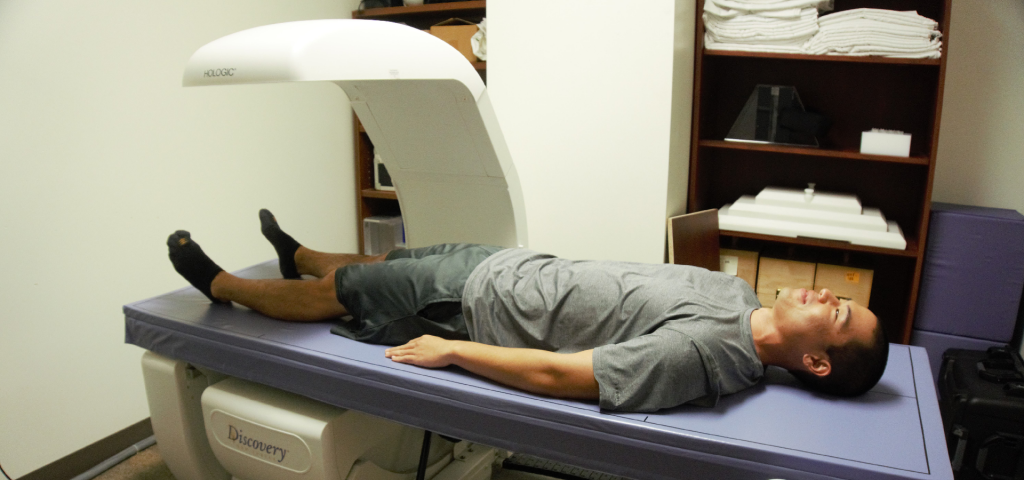
A DXA scan measures body composition, including bone density, lean muscle, and body fat.
What is a DXA scan?
Dual-energy X-ray Absorptiometry (DXA) is the clinical and research gold standard for whole-body composition measurement. The scan separates the body into three compartments — fat mass, lean mass, and bone mineral — with full regional detail across arms, legs, and trunk. It takes less than 10 minutes, uses a radiation dose well below that of a standard chest X-ray, and produces a quantitative report you can compare across visits. DXA is the standard outcome measure in hundreds of published clinical trials and population studies, including the U.S. National Health and Nutrition Examination Survey (NHANES), for which the Shepherd Lab developed the national reference curves for GE Lunar systems used across the United States.
DXA is also the only FDA-cleared technology for quantifying visceral adipose tissue without a separate CT or MRI scan, making it uniquely powerful for metabolic and cancer risk assessment.
Major measures and clinical indices
Total body fat % and Fat Mass Index (FMI). Fat mass expressed as a percentage of total body weight, and normalized to height squared as FMI (fat mass / height²). FMI is a purer index of adiposity than BMI, which confounds fat and muscle, and is more predictive of cardiometabolic risk and all-cause mortality. Our NHANES-derived reference database for GE Lunar systems enables interpretation against age-, sex-, and ethnicity-matched norms. Fan B, Shepherd JA, et al. NHANES whole-body DXA reference data for GE Lunar systems. J Clin Densitom. 2014;17:344–377. doi:10.1016/j.jocd.2013.08.019
Regional fat: Android, Gynoid, and Android-to-Gynoid (A/G) ratio. DXA maps fat to the android region (waist and abdomen, associated with metabolic risk) and the gynoid region (hips and thighs). The A/G ratio is a stronger predictor of metabolic syndrome, insulin resistance, and cardiovascular disease than total adiposity or BMI, because it captures where fat is stored, not just how much. Shepherd JA, Ng BK, Sommer MJ, Heymsfield SB. Body composition by DXA. Bone. 2017;104:101–105. doi:10.1016/j.bone.2017.06.010
Visceral Adipose Tissue (VAT). VAT is the deep abdominal fat that surrounds and infiltrates the organs — the most metabolically active and dangerous fat depot in the body. DXA is FDA-cleared to quantify VAT, which is strongly and independently associated with type 2 diabetes, cardiovascular disease, and multiple cancers including breast, colorectal, and endometrial. VAT elevation is often hidden behind a normal BMI. Kendler DL, … Shepherd J. ISCD Official Positions: Indications and Reporting of DXA for Body Composition. J Clin Densitom. 2013;16:502–519. doi:10.1016/j.jocd.2013.08.020
Lean Mass Index (LMI) and Appendicular Lean Mass Index (ALMI). Total and regional lean mass normalized to height squared. ALMI (arms + legs lean / height²) is the clinical standard for diagnosing sarcopenia — the progressive loss of skeletal muscle that predicts frailty, disability, falls, and adverse cancer-treatment outcomes. The Shepherd Lab published the U.S. NHANES reference curves for regional lean mass and has contributed to international DXA-based muscle-prediction models. Hinton BJ, Fan B, Ng BK, Shepherd JA. DXA body composition reference values of limbs and trunk from NHANES 1999–2004. PLoS ONE. 2017;12:e0174180. doi:10.1371/journal.pone.0174180 McCarthy C, … Shepherd J, Heymsfield SB. Appendicular skeletal muscle mass prediction from DXA body composition models. Sci Rep. 2023;13:2590. doi:10.1038/s41598-023-29827-y
Bone Mineral Density (BMD) and T-score / Z-score. Areal BMD at the total body, lumbar spine, total hip, femoral neck, and forearm. The T-score compares your bone density to a young-adult peak-bone reference; the Z-score compares to age- and sex-matched peers. These are the diagnostic standards for osteoporosis and fracture-risk assessment recommended by the International Society for Clinical Densitometry (ISCD), the National Osteoporosis Foundation, and the U.S. Preventive Services Task Force. Hangartner TN, … Shepherd J. ISCD Official Positions: Acquisition of DXA body composition and considerations regarding analysis and repeatability. J Clin Densitom. 2013;16:520–536. doi:10.1016/j.jocd.2013.08.007
Trunk-to-Leg Fat Ratio. The ratio of trunk fat mass to leg fat mass captures the clinically significant redistribution of fat toward the central compartment that occurs with aging, menopause, and metabolic-disease progression. It is independently associated with diabetes risk, blood pressure, and all-cause mortality beyond total adiposity, and is available only through regional imaging methods such as DXA. Hinton BJ, Fan B, Ng BK, Shepherd JA. DXA body composition reference values of limbs and trunk from NHANES 1999–2004. PLoS ONE. 2017;12:e0174180. doi:10.1371/journal.pone.0174180
Sarcopenic Obesity. DXA uniquely identifies individuals who carry simultaneously elevated fat mass and depleted lean mass — a high-risk phenotype called sarcopenic obesity. Body weight and BMI cannot detect this pattern. Sarcopenic obesity is associated with substantially elevated risk of metabolic disease, falls, disability, and poor outcomes in cancer prevention and treatment, and is increasingly recognized as the most clinically important body-composition phenotype in aging and oncology populations. Shepherd JA, Ng BK, Sommer MJ, Heymsfield SB. Body composition by DXA. Bone. 2017;104:101–105. doi:10.1016/j.bone.2017.06.010
How should I prepare for a DXA scan?
- Avoid heavy exercise for 12–24 hours prior to the scan, particularly resistance training or intense cardio.
- Arrive normally hydrated (neither dehydrated nor overhydrated) as hydration status can affect lean soft-tissue measurements.
- Avoid large meals before the scan; when possible, refrain from eating for about 3 hours beforehand.
- No calcium supplements 24 hours prior to the assessment.
- Inform the technologist of any contrast, barium, nuclear medicine, or radionuclide imaging within 2 weeks of your scheduled appointment.
- Remove all jewelry prior to the appointment.
- If you are pregnant, you will be excluded from this assessment.
What can I expect at a DXA scan?
You will lie down on a table and a scanning arm will pass over your body. The process typically takes less than 10 minutes.
You receive a detailed report at the end of your scan.
Sample report